Showing posts with label criticism. Show all posts

Tuesday, September 24, 2013

Banned Books Week 2013: Rainbow Rowell Discusses Censorship & Love with The Toast


Rainbow Rowell, author of Eleanor & Park and Fangirl, discusses censorship and love in a recent interview with The Toast. Unfortunately, I haven't read either books yet, but they're both sitting tall and proud in in my To Be Read Pile, and I hope to give them their rightful attention soon--as I've only heard wonderful things about them. 

It's truly sad that some places around the country feel the need to remove (or rally to remove) books from their shelves and, in the process, potentially deprive a young person of a story that just might change his or her life for the better.

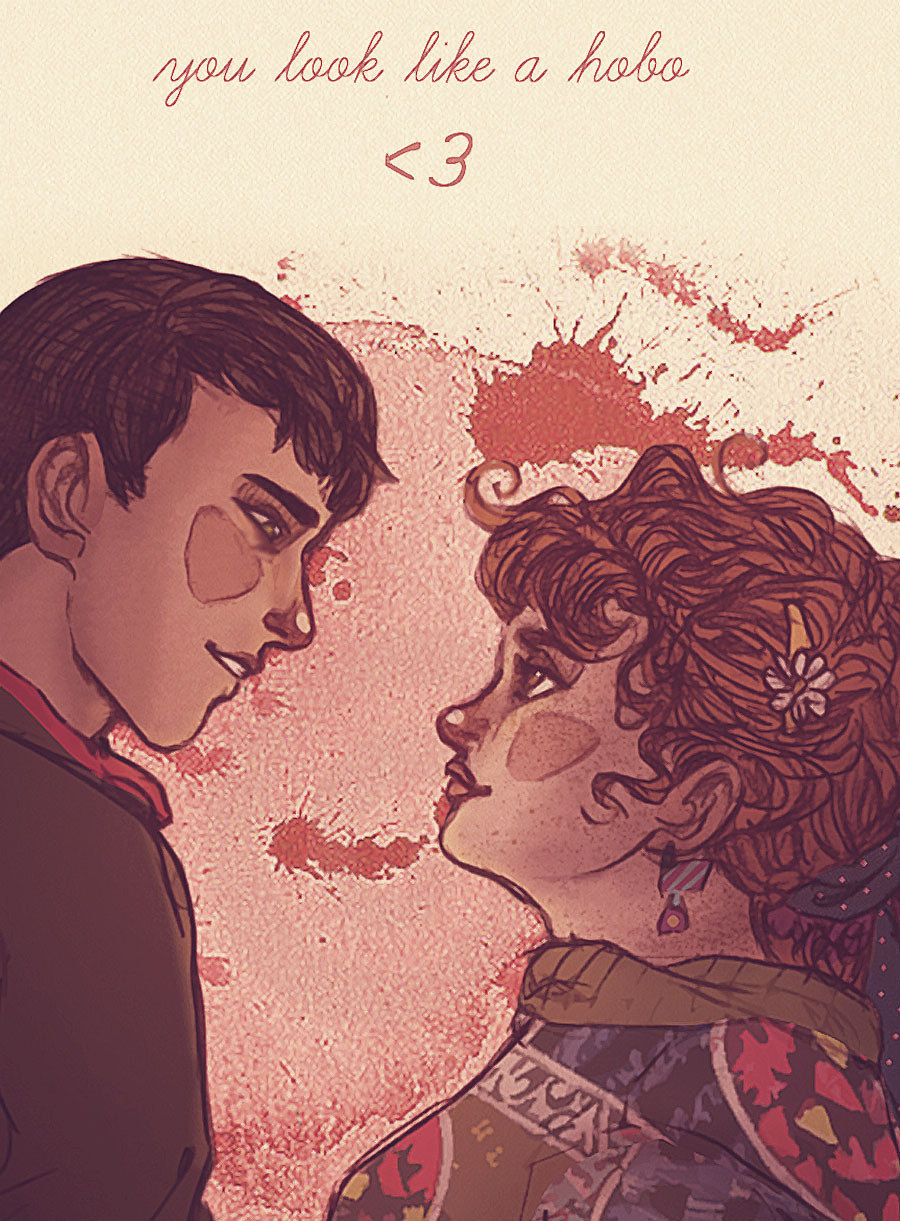
There has also been an abundance of wonderful illustration work surrounding Rowell's story. One of my faves is above--the artist, Henna Lucas, here. 

While Banned Books Week officially runs through the 28th of September, we should celebrate the right to read stories--any and all types--all year round! The American Library Association has a really fantastic interactive timeline listing a few of the most frequently challenged books. Is your fave on the list?


Monday, March 4, 2013

Magical Realities, Perspectives, and the Human Condition: What Does Fantasy Do?


As a person and writer, I've never been able to look at a rock and see just a rock. The rock might grow a pair of legs and walk about the world, wondering why he's been given such a hard exterior in a land full of soft things, or that same rock might sprout a pair of wings and desire a home in the nest of an eagle. Perhaps I'm prone to disregarding the rules and laws of our world because I never quite meshed with my Organic Chemistry and Physics textbooks; or, perhaps, I gravitate toward this magical way of thinking because it is how I come to interact with and wrap my head around the confusing experiences of life.

For me, it's important to embrace this idea of other within literature because it encourages us to stand on our heads and view the world from a different perspective: a fantastical way for us to understand the human condition and experience.

I tell fantastical stories because I don't believe in saying to a character, You have to stop now--you can't go any farther because reality tells you no. I tell fantastical stories because I live for that moment when a character stumbles over that word no and does something special with it. There are many heavy things in this world, and it is my greatest pleasure as a writer to see how a character will interact with that weight: How might he lift it? How might she movie it? How will their directions change once that weight rests in their hands? [These questions might easily be applied to all genres of literature, including realistic--how might they take on different meanings?]

I tell fantastical stories because what if always has and always will intrigue me.

For me, a successful piece of fantastical literature conveys the notion that we don't always have to participate in the traditionally accepted versions of reality in order to understand ourselves and the inherent qualities that make us human. In my eyes, the goal of fantastical literature is to break apart the world we've come to know and, using all those pieces, a combination of recognizable things and never-before-seen things, slowly and carefully snap the universe back together again.

Sunday, November 25, 2012

The Difference Between Fantasy Lit and Science Fiction Lit


One of my all-time fave writers is Ursala K Le Guin; I guess you could say she's somewhat of a hero of mine. In a great interview with Bill Moyer on PBS (video below), she talks about what she feels is the main difference between the genres of fantasy and the genres of science fiction. 

According to Le Guin,

"Science Fiction doesn't contradict science, but it goes on and invents just as freely as fantasy does."
"Fantasy makes up its own rules; it's a much older genre; its roots are deeper." The happenings in a story of fantasy don't necessarily have to align with our current understandings of physics--laws of the world.

Isn't this such a wonderful way to look at these two genres? So often time they are lumped together as Science Fiction & Fantasy--with that misleading ampersand that, in my mind, seems to suggest some extremely close correlation. 

Sure, they are similar genres, but each has its unique perspective and ways in which it critiques a universe.