Showing posts with label Characters. Show all posts

Tuesday, September 24, 2013

Banned Books Week 2013: Rainbow Rowell Discusses Censorship & Love with The Toast


Rainbow Rowell, author of Eleanor & Park and Fangirl, discusses censorship and love in a recent interview with The Toast. Unfortunately, I haven't read either books yet, but they're both sitting tall and proud in in my To Be Read Pile, and I hope to give them their rightful attention soon--as I've only heard wonderful things about them. 

It's truly sad that some places around the country feel the need to remove (or rally to remove) books from their shelves and, in the process, potentially deprive a young person of a story that just might change his or her life for the better.

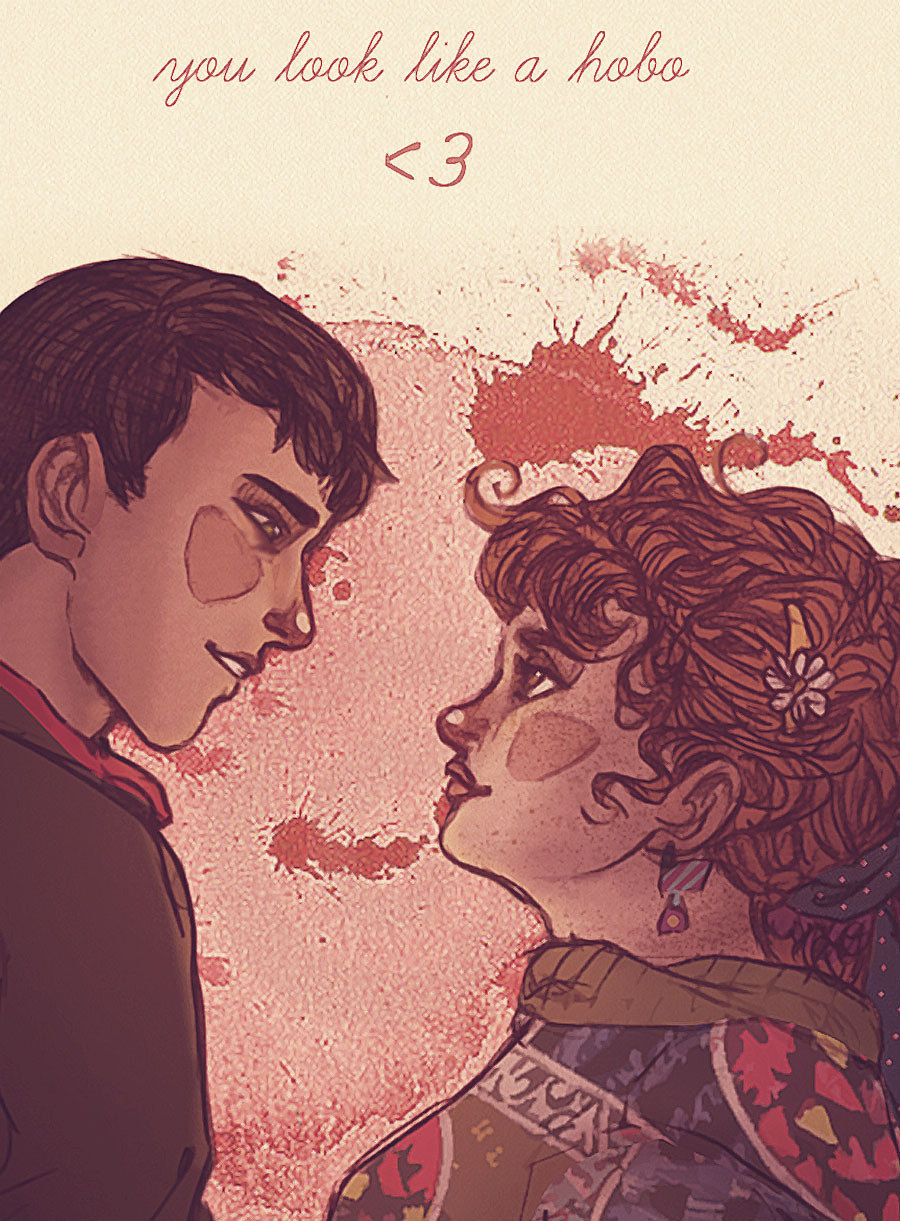
There has also been an abundance of wonderful illustration work surrounding Rowell's story. One of my faves is above--the artist, Henna Lucas, here. 

While Banned Books Week officially runs through the 28th of September, we should celebrate the right to read stories--any and all types--all year round! The American Library Association has a really fantastic interactive timeline listing a few of the most frequently challenged books. Is your fave on the list?


Friday, May 24, 2013

Let's Get Sexual: Sex in YA Lit


As a YA writer, it's always interesting to hear how others deal with sex in their work. Carrie Mesrobian, author of the forthcoming Sex & Violence (Carolrhoda LAB, Oct. 2013), and editor Andrew Karre talked about sex in YA lit at the Children's and Young Adult Literature Conference at The Loft Literary Center in Minneapolis. 

I wasn't in attendance; however, I stumbled across their main points of discussion on Mesrobian's blog (via YA Highway) and they're quite enlightening--especially if you're always thinking about how young adults/new adults view or contemplate sex, both inside and outside the realms of fiction.

Two points (as outlined by Mesrobian) I find particularly enlightening:

1. You can write YA that doesn't have sexual content in it. What you cannot do is write imaginable young adult characters without thinking about them with respect to sex.

6. Adolescence, the notion of childhood innocence, and the concept of privacy are all relatively modern inventions. Reluctance to speak about sex or even expose children or young adults to sex has not always been the norm throughout human history. Also, teenagers have very little privacy in general, less now in the social media age. YA stories that feature long expanses in which characters have uninterrupted romantical sex are in conflict with this reality.

Monday, March 4, 2013

Magical Realities, Perspectives, and the Human Condition: What Does Fantasy Do?


As a person and writer, I've never been able to look at a rock and see just a rock. The rock might grow a pair of legs and walk about the world, wondering why he's been given such a hard exterior in a land full of soft things, or that same rock might sprout a pair of wings and desire a home in the nest of an eagle. Perhaps I'm prone to disregarding the rules and laws of our world because I never quite meshed with my Organic Chemistry and Physics textbooks; or, perhaps, I gravitate toward this magical way of thinking because it is how I come to interact with and wrap my head around the confusing experiences of life.

For me, it's important to embrace this idea of other within literature because it encourages us to stand on our heads and view the world from a different perspective: a fantastical way for us to understand the human condition and experience.

I tell fantastical stories because I don't believe in saying to a character, You have to stop now--you can't go any farther because reality tells you no. I tell fantastical stories because I live for that moment when a character stumbles over that word no and does something special with it. There are many heavy things in this world, and it is my greatest pleasure as a writer to see how a character will interact with that weight: How might he lift it? How might she movie it? How will their directions change once that weight rests in their hands? [These questions might easily be applied to all genres of literature, including realistic--how might they take on different meanings?]

I tell fantastical stories because what if always has and always will intrigue me.

For me, a successful piece of fantastical literature conveys the notion that we don't always have to participate in the traditionally accepted versions of reality in order to understand ourselves and the inherent qualities that make us human. In my eyes, the goal of fantastical literature is to break apart the world we've come to know and, using all those pieces, a combination of recognizable things and never-before-seen things, slowly and carefully snap the universe back together again.

Saturday, November 17, 2012

Rain, Rain, Is Here to Stay!


The Pacific Northwest rains are finally here to stay, and some days I feel like scuba gear is required to successfully traverse the wet streets. Lots of people hate the rain, but I have to admit there's nothing I enjoy more than a nice, large, juicy rain cloud.

The soggy clothes. The chilly weather. The big warm jackets. The mandatory cups of hot chocolate (or, as I've recently discovered, mochas from Starbucks). The heaters. The blankets. The lack of sunshine/lack of sunburns. I love it all.

Rain: Is there really a better excuse to stay in the house and write, write, write or read, read, read?

Monday, October 29, 2012

Sparkly, Shiny, Fresh-Smelling New Ideas!


The fantastic thing about writing stories--about stumbling into new worlds--is that you never know when they might pop up. You could be sitting in a classroom listening to your professor ramble on and on, you could be at work pounding away on that computer, or you could even be pleading to the Celeb Gods that they fix crazypants Lindsay Lohan.

But whenever that sparkly, shiny new idea creeps up on you, it's basically mandatory that you show the world how happy you are.

funny gifs

That happiness will ensue for many days, many weeks, perhaps even many months, until suddenly . . . your shiny new world begins to present problems and conflicts and struggles. And then you get sad, because conflict sort of stresses you out:

funny gifs

And you know what you want your characters to say, you know what you want them to achieve and where you want them to go on their journey, but sometimes you just can't reach the carrot:

funny gifs

But then, as you explore this world more and love this world more and meet new faces within this world and hear all the stories this world has to share, then that joy comes back again:

funny gifs

And then you have to edit the sucker . . . . and we all know how that feels:

funny gifs

Friday, August 24, 2012

Character Therapy


I just realized that my characters do the following things a lot:

1. "Grab a shoulder" (I think this is in an effort to console the other individual; however, now that I think about it . . . it might just be a bit creepy. How often does someone grab your shoulder *and squeeze it* when trying to comfort you? Stop it, characters, stop getting so cheeky. I'm not a romance writer--I wouldn't know what to do with you once you got past the shoulder groping stage!)

2. "Sigh" (Quite possibly the lamest character action ever. #BasketCase #GetOverIt)

3. "Roll their eyes" (Stop giving me and your peers attitude, you mean-angsty-McNasty!)

4. "Tense up" (Chillax, dudes!)

5. "Crack a grin" and, on the opposite side of the spectrum, "Crack a frown" (There's a whole bunch of "cracking" going on--y'all's faces are goin' to be in some pieces soon . . . then what are we going to do?)

Basically, I'm going to start requiring all of my potential protagonists/antagonists/super-random-agonists to enroll in Character Therapy before they even consider hopping into my head. I work for a celebrity gossip/entertainment news site and deal with Hollywood's crazy drama all day. So, my lovely and sweet and manic characters, give me a break, would ya? I understand that some of you simply must roll your eyes every so often, but please don't do it every third paragraph. It STRESSES me out.

What are some of the things your characters do too often?

Monday, April 25, 2011

Characters, What Makes Them Tick?

I've always been told that when introducing a reader to a character, the most important thing to do--first and foremost--is to establish their wants. Let the reader know exactly what they desire, even if it's a grilled cheese sandwich.

But is that it? Just because you know they want a grilled cheese sandwich doesn't make you want to flag them down on the street and say "Hey, wanna' go get a cup of coffee?" Just because I know they want something doesn't make me care any more or less about them--they're simply a person, a common, everyday individual. And interesting stories aren't--as much as we'd like to think they are--about common individuals. The only reason people want to read a story is because it takes a common problem and makes it uncommon--or plants a common problem in a fantastic situation.

It soon becomes a question of not only what they want, but why they want it.

However, even after these two elements have been established, we're still left wanting more. We are just never satisfied, are we? Next, we want to know what will stand in their way? Unless there are hurdles and/or pitfalls along the road on which they're embarking upon, no reader in the world will care if they trip, get stabbed, or curl up in a dark hole.

Taking all of these factors into consideration, I have channeled my inner mathematician to devise a formula, which I think is quite reasonable.

(Their Wants + Their Reasons) + (The Challenges x The Antagonist) =
A *hopefully* Spicy Character on a Heroic Journey